
Eitrige Pickel

Pustules on the face and body: Treat them at the first sign

Everyone knows them: those unwelcome blackheads and pimples that cause plenty of frustration when looking in the mirror. Often, these reddish elevations are filled with pus, a yellowish fluid that develops as a result of bacterial inflammation. They appear particularly where the body has the most sebaceous glands – on the face, neck and back, shoulders, cleavage, and upper arms.
Development and symptoms.
From blackhead to pustule.

Pimples are caused by excessive sebum production. If the sebum can no longer drain away, the glands become clogged. Initially, a whitehead (comedo) forms, which turns black over time. The dark coloration occurs when the pigment melanin in the sebaceous gland reacts with oxygen in the air. If the clogged gland also becomes infected by skin bacteria, the blackhead becomes inflamed and turns into a reddened pimple, in the center of which a yellowish-white focus of pus develops. A pustule develops.

Pustules appear more frequently on the face, specifically in the so-called T-zone, which includes the forehead, nose, and chin. In addition, the back, neck, shoulders, upper arms, chest, and cleavage can also be affected by these unsightly skin blemishes.

A bacterial infection can also cause smaller abscesses. If the encapsulated accumulation of pus forms at a hair follicle, dermatologists refer to it as a furuncle.

Causes of pustules

A number of factors can favor the development of blemished skin and inflamed pustules. These include:

  • hormonal changes
  • the use of care products and cosmetics that are not optimally suited for one’s skin type
  • climatic influences such as strong sunlight and high humidity
  • taking certain medications
  • a diet high in sugar and fat, as well as frequent consumption of dairy products
  • Smoking
  • prolonged stress and severe psychological strain

Adolescents are particularly frequently affected by inflamed pustules. During puberty, almost all young people of both sexes suffer from increased skin blemishes. Due to hormonal fluctuations, many women also complain of pimples during the second half of their cycle. In general, women and men with large-pored, oily skin are particularly prone to pustular skin conditions.

Squeezing pimples?
Hands off!

Even if it is tempting: Squeezing pimples is not recommended, as the open wound can become even more severely inflamed. Furthermore, squeezing can cause bacteria to reach surrounding skin areas, which can lead to further pustules. Those who squeeze inflamed pimples also risk leaving behind unsightly scars.

The use of home remedies is also discouraged. While the frequently recommended tea tree oil has anti-inflammatory properties, its high concentration can cause allergic reactions when it comes into contact with the skin. Much-touted toothpaste is also not a suitable remedy for pustules: it contains ingredients that irritate the skin and can further increase inflammation. Additionally, it dries quickly and forms a hard crust on the pimple, which prevents the pus from draining.

Healthy lifestyle.
Healthy skin.

Diet has a significant influence on the appearance of the skin. For healthy skin, the diet should be balanced and consist of plenty of fruit and vegetables. Food that is too fatty or sugary, as well as too many dairy products, can promote blemished skin.

A healthy lifestyle can help reduce pimples or prevent them from forming in the first place. Regular exercise, preferably in the fresh air, stimulates blood circulation in the skin and increases general well-being. Smoking, alcohol, and unhealthy habits should be avoided, as all of these can promote the formation of pimples. Since stress hormones promote sebum production, hectic schedules, stress, and anger in everyday life should be avoided as much as possible.

In addition, the following measures help to prevent pimples and skin blemishes:

  • Many bacteria congregate on the palms of the hands. Therefore, touch your face as little as possible and wash your hands several times a day for at least 20 seconds. Do not forget the backs of the hands and the spaces between the fingers, and dry them well afterwards.
  • Use different towels for drying your face and hands and change the textiles frequently.
  • Many germs also lurk on smartphones, telephone receivers, and computer keyboards. Regular cleaning and disinfecting of electronic devices helps.
  • Use care products and make-up tailored to your individual skin type. Avoid heavy oils and creams for face and body care. They can clog the pores and prevent sebum from draining.

Targeted treatment for pustules –
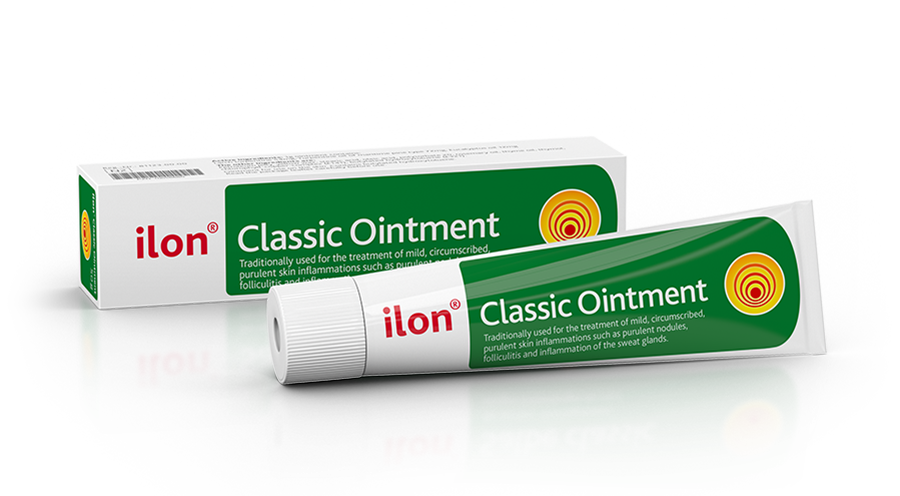
with ilon Classic

Stubborn pustules located under the skin often feel hard and sensitive to pressure, cause pain, and are difficult to get rid of.

The herbal ilon Classic provides targeted support for the skin: it helps to dissolve pus, combats inflammation, relieves swelling and pressure pain, and promotes natural regeneration. The antibacterial effect and the promotion of blood circulation support healing, while the ointment is particularly pleasant to use thanks to its subtle fragrance and almost invisible texture.

FAQ

Purulent pimples

Yes. This can happen when bacteria penetrate deeper and the purulent process spreads to underlying skin layers.

If symptoms persist, worsen, or possible side effects occur, consult a doctor or pharmacist.

A pimple (e.g., inflammation of the hair follicle) often develops in the beard, on the buttocks, on the thighs, and in the pubic area. Possible causes include repeated injuries to the same skin region. This happens easily during shaving, for example, especially in the intimate area. If bacteria manage to penetrate the top layer of skin, the area around the hair follicle can become inflamed – resulting in so-called folliculitis. Symptoms such as superficial pustules or inflamed nodules appear on the skin around the hair; in this case, medical professionals refer to these as boils.

Even though it may be difficult: you should never take matters into your own hands when it comes to whiteheads on the face or body. If sebum enters the surrounding tissue during improper squeezing and pressing, bacteria can penetrate deeper into the skin, leading to the spread of inflammation and even causing an abscess. This prolongs the healing process and can also leave behind unsightly scars.

You should also avoid squeezing blackheads with a commercially available comedone extractor if possible. If used incorrectly, bacteria can also enter the skin and cause inflammation. Instead, a professional treatment in a cosmetic studio is recommended.

Underground or deep-seated pimples are essentially “normal” pimples—meaning inflammation caused by clogged pores. These typically result from an overproduction of sebum, which can lead to bacterial growth and eventual inflammation within the pore. With deep-seated pimples, the blocked pores are located in deeper layers of the skin, and the pimple only migrates to the surface after several days.

Unlike occasional pimples and blackheads, acne is a chronic condition caused by increased sebum production (seborrhea) and excessive keratinization of the skin pores (hyperkeratosis). This promotes the blockage of sebaceous glands and leads to increased occurrence of pimples.

Depending on the severity, different types of acne are distinguished. If you have acne, you should always consult a dermatologist.

ilon® Classic Ointment. Active ingredients: larch turpentine, turpentine oil (maritime pine type), eucalyptus oil. A traditional herbal medicinal product for the treatment of mild, localised, purulent skin inflammation, such as small pus-filled nodules, inflamed hair follicles and inflamed sweat glands, based solely on long-standing use. Contains butylhydroxytoluene. (Information as of December 2024)

For information on risks and side effects, read the package leaflet and ask your doctor or pharmacist.

Cesra Arzneimittel GmbH & Co. KG, Flugstraße 11, 76532 Baden-Baden