
Treating nail bed infections.
Recognize and treat infections in the nail area early.

Inflamed skin tears around nails or the nail fold can quickly develop into a nail bed infection if left untreated. Corresponding symptoms should therefore be treated promptly with appropriate medications to counteract infection of the nail bed. An inflamed nail bed should always be taken seriously and treated.
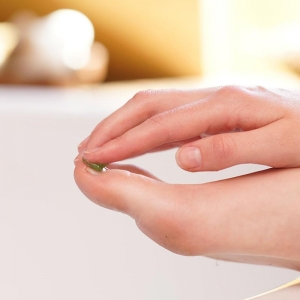
Nagelbettentzündung

Nail bed infection.
Causes and risk factors.

A nail bed infection, also called paronychia or panaritium in medical terminology, refers to infection of the nail bed. This is the tissue area from which the nail grows and which is covered by the nail. The so-called periungual tissue, the tissue around the nail, can also be inflamed. The infection can occur on both fingers and toes.

The most common cause of nail bed infection is bacteria. Staphylococci in particular can severely affect the nails. Many bacteria and viruses accumulate especially on the fingertips, which is why they should not be forgotten when disinfecting hands.

On undamaged skin areas, the pathogens cause no harm. However, through minor injuries or wounds, the bacteria can enter the body and cause an acute infection. Even tiny tears, irritated skin areas, minor cuts, or ingrown nails open the door to pathogens.

Such wounds can occur during careless nail care or through intensive skin irritation, for example from cleaning agents. Strong nail polish removers also attack the protective skin on and around the nail and can facilitate the penetration of pathogens.

Increased risk of infection.
Risk groups and factors.

In principle, anyone can be affected by a nail bed infection. However, some groups of people have a higher risk:

  • Women are affected more frequently than men. They perform more intensive manicures and pedicures and can therefore injure themselves more easily.
  • Occupational groups that handle chemical substances are more likely to become infected with the pathogens. These include doctors and hospital staff, hairdressers, and cleaners.
  • People with very dry skin, eczema, or diabetes are more susceptible to nail bed infections.
  • For people who bite their nails, there is also an increased risk of infection.

Paronychia.
Signs and symptoms.

Depending on the location of the symptoms, medicine distinguishes between two forms of nail bed infection:

Panaritium paraunguale refers to cases where the periungual tissue, i.e., the skin around the fingernail or toenail, is affected by the infection.

Panaritium subunguale refers to cases where the nail bed itself is affected.

The first symptoms of a nail bed infection are generally redness of the affected skin area and itching. Subsequently, the area swells and the skin appears reddish and shiny. Typical of the infection is additional local overheating. An inflamed toe can be particularly painful, throb, and hurt when touched.

While the area initially only hurts when pressure is applied to the nail plate and surrounding skin, moderate to severe pain without pressure stimulus can develop as the disease progresses. As an inflammatory reaction, throbbing in the affected limbs may also occur. In panaritium subunguale, swelling with pus formation under the nail occurs after a few days, causing severe pain.

In general, a nail bed infection on the toe is often more painful because one’s own weight rests on the toes when walking.

If the infection is not treated for an extended period, nail growth can be disrupted. If pus additionally accumulates under the nail plate and does not drain on its own, the affected nail can detach from the nail bed and fall off.

An acute nail bed infection typically affects only individual fingers or toes. Patients with certain conditions or people who are continuously exposed to chemical substances for occupational reasons usually suffer from chronic paronychia. In this case, several or even all fingers or toes are affected. Chronic nail bed infection is less painful; in addition to the usual symptoms, a yellowish-green discoloration of the affected nails may occur.

Infections in the nail area.
Treatment with specialized ointments.

Home remedies can only inadequately treat infections in the nail area. While tea tree oil, chamomile baths, curd soap, or antiseptic compresses are often recommended, such applications usually cannot keep the infection in check. Medications such as specialized ointments from the pharmacy or visiting a doctor are considered the best approach. There, those affected receive comprehensive advice to successfully treat the infection.

Caution with self-treatment!

Treating an infection in the nail area always involves risks. Therefore, consult a doctor or pharmacist. This applies especially to prolonged symptoms, worsening of complaints, or possible side effects.

Prevent Nail Bed Inflammation –
with ilon Classic

Torn skin around the nail or a nail care mishap – even small injuries can introduce germs into the skin and lead to painful nail bed inflammation. ilon Classic offers first aid for incipient nail bed inflammations.

ilon Classic has an antibacterial effect and dampens inflammation, preventing a small problem from becoming a larger one.

Prevention.
Preventing nail bed infection.

Careful care of the nails and surrounding skin is considered the most effective method to avoid acute infection:

  • For care of cracked, dry skin around the nail bed, fatty creams are suitable. Also regularly apply cream to the nails themselves.
  • Regularly file or cut fingernails and toenails to prevent ingrowth or breaking.
  • File fingernails round, but not too deep into the lateral wall.
  • Toenails, however, are cut straight. Rounding them increases the risk of ingrown nails. To avoid injuries to adjacent toes, file sharp nail edges.
  • Do not trim cuticles with scissors. With a mild oil bath or cuticle remover from the pharmacy, the sensitive skin becomes supple and can then be pushed back with a rounded pusher.
  • If signs of inflammation are already noticeable on the nail or surrounding skin, nail polish should not be used.
  • Always wear gloves when handling harmful substances.
  • Heavy stress on toenails can be counteracted with comfortable footwear made of breathable materials, in which the feet have sufficient space and ideally do not sweat.
  • Diabetes patients with reduced pain sensation in their feet often do not notice injuries from nail scissors or nail clippers at all. It is therefore advisable to have regular nail care performed at a medical podiatry practice.

FAQ

Nail bed infections on fingers and toes

Yes. Symptoms such as throbbing pain “under the nail” and severe tenderness may indicate that the inflammation is deeper or spreading.

Gentle nail care (don’t cut too short), don’t tear cuticles, disinfect minor injuries, dry hands/feet thoroughly, and keep tools hygienic.

It is important to clean the area carefully, disinfect it appropriately, and not to apply pressure. The ointment can then be applied locally and, ideally, covered with a plaster or bandage (please refer to the package leaflet/summary of product characteristics). The treatment should be repeated daily. If symptoms worsen despite treatment, medical advice should be sought.

Mild cases can improve within a few days with early treatment. If it persists or worsens, it can last significantly longer and should be medically evaluated.

It often develops within hours to a few days – especially after minor injuries, torn cuticles or manipulation of the nail.

A nail bed infection initially manifests itself through redness and itching at the affected area. While the area is only painful when pressure is applied at the beginning, persistent and sometimes severe pain can occur as it progresses. The area typically swells and the skin of the affected region appears shiny and reddish. Another typical symptom is local overheating of the inflamed area. Additionally, throbbing may occur in affected fingers and toes.

If you experience severe pain, local overheating, or throbbing, you should consult your doctor.

Try to remember how the previous nail bed infections may have occurred and find out what the current cause might be. Ask yourself the following questions: Was it always the same nail? Were there or are there minor injuries in the nail area?

To prevent another infection, avoid anything that could injure the area around the nail! Care for your hands with a cream to make the skin more supple and therefore more resilient.

If symptoms persist, worsen, or possible side effects occur, consult a doctor or pharmacist.

A nail bed infection is often more uncomfortable on the toe and can be somewhat more complicated than on the finger, as it is more frequently caused by ingrown nails. Pressure from shoes can worsen the inflammation, and poor circulation may delay healing; however, it only becomes truly dangerous in cases of severe pain, extensive redness, pus, or risk factors such as diabetes—if treated early, it usually remains harmless.

The most common triggers for nail bed inflammation are minor injuries to the cuticle or nail fold, for example from torn cuticles, nail biting, pushing back the cuticle too forcefully, unhygienic manicure/pedicure or irritation from ingrown nails. Other typical causes include constant moisture (frequent hand washing, sweating), pressure or friction from tight shoes, and infections with bacteria (usually staphylococci), less commonly from fungi.

The nail bed refers to the area of tissue from which the nail grows and which is covered by the nail. The tissue surrounding the nail is known as the perionychium.

For a nail bed infection, warm baths, disinfection and rest are particularly helpful for the affected area. The area should also be protected with a plaster. If the inflammation is on a toe, wide or open shoes should be worn to avoid pressure. Do not press or squeeze, as this can worsen the inflammation. If there is severe pain, pus, extensive redness, or no improvement after 2–3 days, a doctor should be consulted, especially if there are risk factors such as diabetes.

Medical advice is essential if you experience severe pain, increasing swelling/heat, pus, spreading (e.g., a reddish streak), fever, or swollen lymph nodes—or if the condition does not improve after a short time.

ilon® Classic Ointment. Active ingredients: larch turpentine, turpentine oil (maritime pine type), eucalyptus oil. A traditional herbal medicinal product for the treatment of mild, localised, purulent skin inflammation, such as small pus-filled nodules, inflamed hair follicles and inflamed sweat glands, based solely on long-standing use. Contains butylhydroxytoluene. (Information as of December 2024)

For information on risks and side effects, read the package leaflet and ask your doctor or pharmacist.

Cesra Arzneimittel GmbH & Co. KG, Flugstraße 11, 76532 Baden-Baden