

 DE
Correct positioning and frequent repositioning of the affected person are the best preventive measures to avoid pressure ulcers. Encourage the patient to help themselves – even the smallest movements are effective against pressure sores.
Sore Skin:
The skin is the largest human organ. Covering an area of one and a half to two square meters, it envelops the entire body and performs numerous vital functions. It prevents the penetration of pathogens and harmful substances, regulates water balance and body temperature, and protects internal structures and organs to a certain extent from external influences such as bumps or impacts.

Even small wounds caused by pressure or chafing can disrupt the balance of the natural skin barrier and have a negative impact on health and well-being. To protect against mechanical stress on the skin, targeted prevention and consistent skin care are therefore of paramount importance.
Pressure and friction in everyday life.
Attacking the skin’s protective film.
During sports and leisure activities such as cycling and hiking, on long journeys, and even in everyday professional life during activities that require long periods of sitting or standing, pressure and friction can occur on various parts of the body.
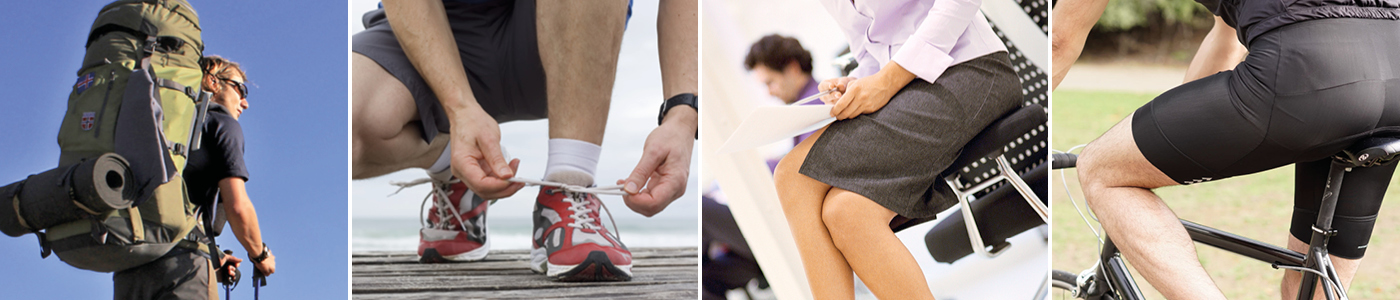

The following body regions are often particularly affected:
The buttocks
due to one’s own body weight during long periods of sitting on a chair or saddle
The feet
due to footwear that is too tight or incorrect, or permanent contact with pedals
Chest and back
due to chafing clothing or carrying straps from bags and backpacks
Underarms and genital area
due to heavy sweating and rubbing clothing
If pressure and friction persist over a longer period of time, blood no longer circulates sufficiently and a lack of blood flow can occur. Affected skin areas are no longer adequately supplied with oxygen and nutrients, and the skin reacts sensitively and becomes irritated in these areas. If moisture, e.g. from body sweat, is added to pressure and friction, the skin’s natural protective lipid film is lost.
Avoid pressure.
Prevent friction.
Pressure points are usually caused by a lack of movement and remaining in the same position for a long time. Regular stretching and reaching at the workplace, on long journeys, and during sports promotes blood circulation in the skin and the supply of nutrients. Shoes should fit well and not be too tight. In general, when buying clothes, make sure that nothing cuts in or restricts freedom of movement.
The skin is exposed to friction not only during sports but also in everyday life. Overweight people in particular suffer from painful irritations caused by skin-on-skin rubbing, e.g. on the thighs. Weight loss helps here, preferably by switching to a conscious lifestyle with a balanced diet and regular exercise. This benefits not only the skin but overall health as well.

Saddle sores in sports.
Skin stress during cycling and riding.
In sports such as cycling and horse riding, pressure and friction zones are created by sitting while in motion. The high localized stress caused by one’s own body weight puts a particular strain on the skin of the buttocks and causes painful pressure points. The constant, uniform movement of pedaling a bicycle or the rhythmic up and down movement of riding leads to constant friction on the buttocks, inner thighs, and in the genital area. The result: the skin in the stressed body regions becomes chafed, which causes severe pain and requires a longer break from your favorite sport for the sore areas to heal.
To avoid serious health damage from saddle sores, a saddle individually adapted to your own body is necessary. Not infrequently, posture is also the cause of persistent pressure and requires optimization. To prevent permanent friction due to chafing trouser seams, you should look for good workmanship without disruptive internal bulges when buying sportswear. In addition, the use of medical ointments, such as ilon Protect, can be useful, as they provide vulnerable skin areas with a protective film and promote blood circulation.

Pressure sores.
Risk of decubitus in cases of immobility.
People in need of care are affected to an increased extent by skin problems caused by pressure and friction, especially in cases of immobility and severe obesity. Long-term or permanent bed confinement can lead to pressure sores, as body weight constantly exerts pressure on the same areas of skin. Due to restricted mobility, the patient cannot relieve the affected region without outside help or may not even notice discomfort due to impaired pain perception.
The body regions mainly at risk are those where the skin lies directly over the bone. In addition, medical equipment such as probes and catheters, as well as wrinkles in bed sheets and clothing, can cause pressure.
Permanent pressure loads can cause serious health risks: blood cannot circulate sufficiently at the affected skin areas, underlying tissue is supplied with too little oxygen, and the cells gradually die off. A pressure ulcer develops, known in medical terminology as decubitus. Depending on the severity, a decubitus is divided into four different stages – from a wound in superficial skin layers (Stage 1) to terminal decubitus (Stage 4), in which not only all skin layers are missing, but tendons, muscles, bones, and tissue are also destroyed.
Targeted prevention.
Reduce the risk of decubitus.

Pressure sores.
Pressure ulcers in wheelchairs.
Sitting in the same position for long periods also worsens blood circulation in the tissue and, in the worst case, can lead to tissue death. Due to the pressure of the entire body weight on one part of the body – usually the tailbone – there is an increased risk of decubitus for people in wheelchairs.
Special wheelchair cushions offer the best possibility for relief. Enlarged contact surfaces distribute weight better and ensure that pressure is reduced. Individually manufactured cushions can also take special anatomical requirements into account.
To support relief measures, special medical ointments can help prevent pressure and friction effects. To counteract additional skin stress caused by moisture, the use of a preparation such as ilon Protect is recommended, which is characterized by both sweat resistance and breathability.

Moist skin.
Increased risk of infections.
When there is moisture on the skin – caused by heavy sweating or incontinence, a common side effect for those in need of care – there is a risk that the skin in the affected body areas can become chafed. Bacteria and pathogenic germs then have an easy time penetrating into deeper skin layers and causing infections. Depending on the pathogen, this can manifest as painful and itchy blisters, lichen, ulcers, or furuncles.
Regular body hygiene and intensive skin care can prevent excessive skin moisture and an increased risk of infection. Creams and lotions specifically for use on skin that is too moist are available on the market. With its breathable protective film, ilon Protect prevents bacteria from penetrating the softened skin. At the same time, the skin’s own barrier function is supported and its resilience is improved. With ilon Protect, moisture and infection are perfectly prevented.

Poor wound healing.
Skin problems in diabetics.
People with diabetes suffer greatly from dry skin with chronic itching. Cracks in the skin facilitate the penetration of viruses and bacteria, which can cause skin diseases and infections. In addition, as a result of high sugar levels, blood circulation is impaired and wound healing is delayed. The skin on the feet is more susceptible to pressure points and friction injuries.
Since diabetes is accompanied by reduced pain perception due to nerve damage, injuries are often only noticed late, when the wound has already become inflamed or the tissue is damaged. This is referred to as diabetic foot.
Prevention and targeted skin care with ointments that simultaneously nourish and protect the skin are therefore essential for diabetics. The use of ointments such as ilon Protect can be helpful: it protects the compromised skin from pressure and friction and prevents the penetration of germs. At the same time, it maintains the skin’s moisture. Consistent use promotes blood circulation and thus supports the skin’s metabolism and resilience.
Medical skin care.
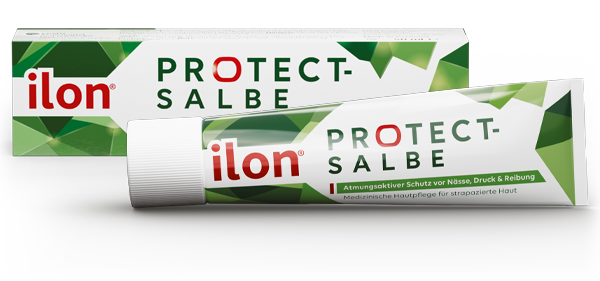
When pressure, friction, and moisture attack the skin’s protective film, intensive care is needed that prevents damage and protects the skin sustainably. ilon Protect has a dual effect: on the skin surface, the medical cream forms a protective layer to support the natural skin barrier, while at the same time the combination of high-quality natural ingredients penetrates into deeper skin layers, keeping the skin supple and strengthening its structure.
The special principle of action of the ointment is based on an optimally coordinated interaction of natural ingredients. Larch balsam and valuable essential oils from thyme, rosemary, and eucalyptus unfold their circulation-promoting effects in ilon Protect. Natural beeswax, petroleum jelly, and moisturizing olive oil form a long-lasting, moisture-resistant protective film. This nourishes the skin and increases resilience against pressure and friction.
ilon Protect is free from preservatives and its skin compatibility is dermatologically confirmed. It is suitable for regular use on heavily stressed skin areas. The medical cream has a pleasantly fresh scent and is very economical.
FAQ
Sore skin from pressure and friction
Prolonged sitting in the same position impairs blood circulation in the tissue. In the worst case, this process can lead to tissue death. Pressure ulcers often occur where the bones lie directly beneath the skin. This creates very high pressure on these areas. The best way to relieve pressure for wheelchair users is through special wheelchair cushions. They ensure that there is no longer a direct pressure point and the affected area – usually the coccyx – is relieved.
n
To reduce pressure points, wheelchair users require consistent skin protection with a nourishing component. Skin care ointments such as ilon Protect protect and nourish the skin sustainably. Despite being sweat and water resistant, ilon Protect is breathable, so that heat build-up can be reduced.
The fundamental issues are the same for women and men, despite different anatomies. Seek advice at a specialty store to find out which saddle shape best suits your individual cycling practice. Generally, harder saddles are better than overly soft ones. A professional with a racing bike naturally requires a different saddle than a hobby cyclist who only undertakes light tours.
To protect against painful skin irritations, you can apply a special ointment, such as ilon Protect, before cycling. Due to its long-lasting protective film, it acts as a buffer against chafing pressure and friction.
When cycling, your hands are constantly “working” too, which puts a lot of strain on the skin. That is why even well-padded gloves should always be checked for pressure points or areas that rub, such as seams and inner ridges.
Pain at the affected site is usually a symptom of a pressure ulcer. However, pressure sores from lying, sitting, or chafing often affect patients who are bedridden or have limited mobility due to health restrictions and are therefore frequently on painkillers. Due to the medication, the patient may not notice the pain from the pressure ulcer themselves.
Inline skaters often underestimate the importance of choosing the right shoe size, suitable socks, and reliable skin protection. Yet all three factors play a vital role in skin health. Feet only feel comfortable in a properly fitting shoe; therefore, you should always wear the sports socks you intend to skate in when trying on new inline skates.
ilon Protect provides care and protection for stressed feet.
Blisters when hiking are usually caused by friction and pressure. To prevent them, it is important to wear well-fitting shoes that are properly broken in, and to choose moisture-wicking socks made of merino wool or synthetic materials. In addition, ilon Protect-Salbe can be applied to areas exposed to increased pressure, such as heels and toes, to form a nourishing and protective barrier and reduce friction. For particularly susceptible areas, blister plasters or tape can help. Regular breaks to check your feet and change wet socks also help ensure that your feet stay dry and protected.
In a triathlon, it is important to protect the skin from moisture, pressure and friction to prevent injuries and skin irritation. To do so, you should choose well-fitting, moisture-wicking triathlon clothing with minimal seams to reduce chafing. Special triathlon suits or tight-fitting clothing prevent unnecessary pressure. A so-called “chamois cream”, applied to areas of skin that come into contact with the saddle, wetsuit or shoes (e.g., thighs, feet, genital area), helps protect against chafing and skin irritation. When swimming in a wetsuit, a thin layer of ointment helps protect the skin from friction. Sensitive areas such as the Achilles tendons or toes can be protected from friction and pressure with special blister plasters or tape. After swimming, you should change into dry clothing immediately to keep moisture away from the skin and prevent skin irritation.
Chafing or pressure sores can occur in all three triathlon disciplines. When swimming, it is important that the wetsuit is the correct size and not too tight, so that the skin under the armpits, on the thighs, or on the neck does not chafe.nnWhen cycling, severe pressure sores can occur on the buttocks. To avoid this, the saddle must be correctly adjusted in terms of height and position. Vulnerable skin areas such as the buttocks and feet can be protected and cared for with a special ointment.nnWhen running, the skin often chafes against clothing or due to heavy sweating on the heels, inner thighs, armpits, and chest. In all cases, ointments like ilon Protect can help by forming a long-lasting protective film on the skin.
Whether you are a triathlete, diver, surfer or other water sports enthusiast: Anyone who wears a neoprene suit or wetsuit can develop sore spots from mild chafing. The area around the neck is particularly susceptible. This can be caused by suits that do not fit properly. Therefore, when buying, make sure that the collar or the suit itself is not too big or too small. Other causes of skin irritation can be the zipper or hook-and-loop fasteners.
A good solution to counter the effects of constant friction on the skin is to apply ointments preventively that form a protective film. The thin protective film helps prevent chafing and can also care for the skin at the same time.
Riding inevitably involves pressure and friction. Even the best saddle is subject to this principle. Because a riding saddle – unlike a bicycle saddle – is particularly large, a relatively large body area is affected. However, if the saddle causes persistent severe chafing, a thorough inspection for problematic areas and their elimination, if possible, is recommended.
Sore spots on the ankle are often caused by rubbing socks or shoes that are cut too high. Sometimes, the lacing of the hiking boots or a poorly fitting tongue inside also creates a pressure point that is often only felt after hiking. Examine the shoes for any irritating areas and try to resolve the problem.
When cycling, friction-related pressure and saddle discomfort often occur. Acute symptoms should be allowed to subside before you get back on your bike. To prevent skin problems in the future, it is advisable to apply an ointment such as ilon Protect before every bike ride, which both protects and cares for the skin.
On multi-day tours, frequent breaks should be planned to relieve pressure on the buttocks. If possible, do not sit during these breaks; instead, stand or walk so that the skin on the buttocks is sufficiently supplied with blood again.
If it is worth it, you can have a tailor alter the chafing seam areas. Otherwise: When cycling, only wear shorts that fit perfectly and have no irritating inner seams or ridges.
Pressure sores, also known as decubitus ulcers, are damage to the skin and underlying tissue caused by sustained pressure or friction. Body areas where bones lie directly beneath the skin, such as heels, the tailbone, or hips, are particularly vulnerable. The pressure restricts blood circulation, meaning the skin is no longer adequately supplied with oxygen and nutrients. This can lead to skin redness, open wounds, and in the worst case, deep tissue damage. Decubitus ulcers frequently occur in people who lie or sit for long periods and have limited mobility. Good skin care, regular repositioning, and pressure-relieving measures help prevent pressure sores.
First, inspect your footwear for rubbing or pressure points and eliminate these risk factors. Depending on the type of your sports activity, skin problems can also be attributed to unsuitable footwear. For example, due to different stresses on the feet, different shoes are needed for jogging than for hiking.nnIf possible, allow your feet to rest and let the discomfort subside. Home remedies such as baby powder in hiking and running shoes do not offer sufficient protection for more intense skin stress. Before the next intense strain, the application of a skin protection ointment like ilon Protect can be beneficial. The nourishing component is particularly good for the feet.
Chamois cream is a special skincare cream developed to prevent skin irritation and chafing caused by repeated friction. It is used especially in cycling, triathlon, and other endurance sports, as these activities are often associated with intense friction and pressure on the skin. The term “chamois” originally comes from the use of the cream on the leather of bicycle saddles, which were often made from goatskin (chamois leather) in the past. Today, the cream is applied directly to the skin to create a protective barrier. ilon Protect serves a similar function: as a medical skincare product, it can help prevent skin irritation and protect the skin from external stressors.
Incontinence-associated dermatitis (IAD) is an inflammatory skin condition caused by repeated contact of the skin with urine or stool. Moisture softens the skin, while irritating substances attack the natural acid mantle. This makes the skin more susceptible to redness, irritation, and inflammation. Affected skin areas, particularly in the buttocks, groin, and thigh region, may burn, itch, or be painful. Careful skin care with gentle cleansing, moisturizing, and protective barriers helps prevent IAD and relieve existing irritation.
In the case of intertrigo, a skin irritation caused by friction and moisture, it is essential to keep the affected areas clean and dry. Frequent changes of clothing, especially during heavy sweating, as well as the choice of breathable fabrics, help prevent moisture accumulation.
The ilon Protect is a breathable, nourishing skin protection ointment that supports the skin under stress. However, it is not suitable for treating existing intertrigo or chafing. At the first signs of redness, itching, oozing, or irritation, prompt action should be taken to avoid inflammation or infection. In the event of intertrigo, be sure to consult a doctor to initiate the appropriate treatment.
The skin and underlying tissue in the intimate area are particularly sensitive. In case of chafing, one should pause riding and allow the affected areas to heal completely.
n
As soon as you resume riding, it is recommended to use an effective protective ointment, such as ilon Protect, with a nourishing component. The ointment should be applied to all body areas that come into contact with the saddle or horse.
Diabetics are particularly sensitive to pressure, friction, and moisture, as their skin is often drier and less resistant to mechanical stress. Nerve damage (neuropathy) can reduce pain perception, meaning that pressure points or skin irritations often go unnoticed for a long time. At the same time, restricted blood circulation causes small skin injuries to heal more slowly and become inflamed more easily.
Particularly on the feet and other stressed areas of the skin, prolonged pressure or friction can lead to sore spots, blisters, or even open wounds. If moisture from sweating or incontinence is also present, the skin becomes softened and even more susceptible to damage and infection.
Special skin protection that reduces pressure and friction and regulates moisture is therefore essential. Products such as protective ointments or barrier creams help to stabilize the skin and minimize the risk of skin damage.
With incontinence, the skin is exposed to significant additional stress. Despite incontinence pads, the skin in the genital area comes into contact with urine and/or stool. Digestive enzymes contained in stool attack skin proteins. If urine is alkaline, it destroys the skin’s acid mantle. Normally harmless bacteria or fungi in excretions can multiply rapidly in the moist skin environment under incontinence pads, especially on pre-damaged skin, and cause widespread infections. The skin can be protected from wetness and urine by gently cleaning it regularly, drying it carefully, and then caring for it with a breathable, water-repellent protective ointment.
