
Diaper dermatitis.
Contact eczema in the buttocks and genital area.

Diaper rash is also one of the most widespread skin inflammations. Estimates suggest that two-thirds of infants and young children suffer at least once, and usually several times, from a rash in the buttocks and genital area.

Patients with urinary or fecal incontinence are also affected by the inflammation. In these cases, it is referred to as Type II diaper dermatitis or incontinence-associated dermatitis.

Causes and risk factors.

In infants, a sore bottom can occur quickly, even if everything has been done correctly. Often, the unpleasant redness is triggered by other changes such as infections, teething, or certain foods that also influence the skin’s condition.

Diaper dermatitis can be favored by various factors:

Infrequent diaper changes

Prolonged and repeated contact with stool and urine irritates sensitive baby skin. Due to the warm, moist climate inside the airtight and waterproof diaper, the top layer of skin swells and loses its natural protective function. Pathogenic germs such as fungi and bacteria have an easy time in this environment and can multiply rapidly.

Diarrheal diseases

With frequent bowel movements, it is not always possible to keep the diaper dry; furthermore, intestinal excretions are more aggressive.

Allergic Reactions

Cleaning products and care creams may contain fragrances and preservatives that the baby cannot tolerate, causing inflammation. Washing too frequently with soap can also unnecessarily irritate the delicate skin.

Recognizing diaper dermatitis.
Typical signs.

Diaper rash manifests as blurred, extensive redness; the skin in the genital and buttocks area is softened. Small pustules and pimples may appear at the edges of the reddened area.

In more severe cases, the rash spreads to the thighs or back; furthermore, diaper dermatitis can lead to a secondary infection by yeast fungi with large-scale nodules or blisters. This is then referred to as diaper thrush.

Diaper rash can significantly impair a baby’s well-being. During movement, touch, urination, and bowel movements, the inflamed skin can burn or hurt. Children affected by a sore bottom are often tearful, do not want to eat, and sleep restlessly.

What helps?
Treating diaper rash.

In the case of diaper dermatitis, a few simple measures are generally sufficient to allow the irritated skin to recover and the inflammation to subside:

  • It is important that the buttocks and genital area are always kept dry and clean. Diapers should be changed at least every three to four hours; an immediate change is advised after urination and bowel movements. Instead of airtight plastic diapers, the use of breathable disposable diapers is recommended.
  • Clear, lukewarm water is sufficient for cleaning the diaper area. Soap can unnecessarily irritate the skin; to remove dried dirt, a cloth moistened with oil is recommended. Special attention should also be paid to skin folds. After cleaning, gently but completely dry the buttocks and genital area with a soft towel.
  • A sore bottom heals better when air reaches the skin. Whenever possible, the child should be allowed to kick or move around the house without a diaper.
  • Chamomile baths can soothe the affected skin; additionally, ointments containing zinc keep moisture away from the skin.

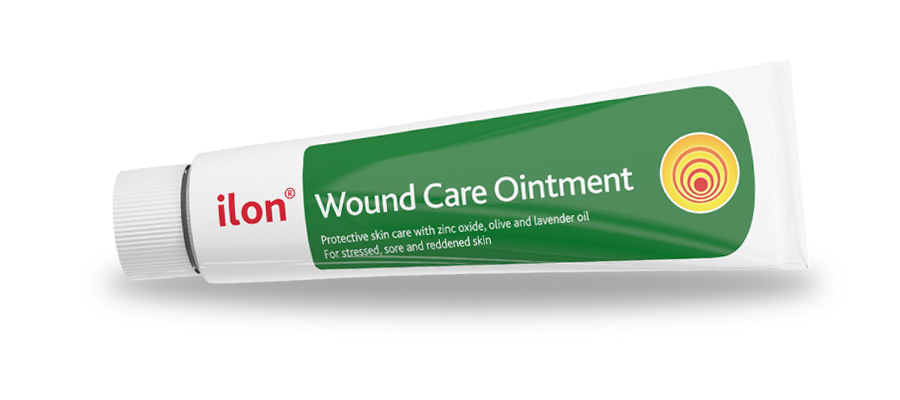
ilon Woundcare has proven itself many times over for sore and irritated skin. The efficient effect of the ointment is based on the selection of carefully coordinated ingredients of natural origin: The combination of zinc oxide, high-quality oils, as well as natural fatty acids and important skin vitamins reduces the occurrence of inflammation and helps the skin to regenerate.

The ointment has a subtle lavender scent and is easy to use: Apply a thin layer to the affected skin areas several times a day and massage in gently. Babies enjoy the gentle massage, which simultaneously facilitates the transport of the nourishing ingredients into the skin and supports their development. ilon Woundcare leaves a pleasant, regenerating protective film on the skin. It is well-tolerated by the skin and also suitable for use on delicate baby skin.

If you are unsure, or if the symptoms do not improve within a few days or even worsen, please consult your pediatrician immediately.

Diaper dermatitis in adults.

Diaper rash can also develop in adults. Those at risk are primarily elderly and bedridden people who wear pads or diapers permanently due to incontinence. Inadequate hygiene, an incorrect diet, and frequent diarrheal diseases can further favor Type II diaper dermatitis.

The same therapy methods used for children are suitable for treating adults. In the case of bacterial infections, antibiotics may also be used as a supplement.

FAQ

Diaper dermatitis

Diaper rash in babies and toddlers is usually harmless, especially if the inflammation is detected early and treated accordingly. However, if the symptoms do not improve within three days or you are generally unsure, it is advisable to see your pediatrician.

If diaper rash is detected early and treated accordingly, the inflammatory skin reaction can subside within a few days. In the case of advanced diaper dermatitis, however, it can take several weeks for the affected skin areas to heal completely.

Diaper rash is a non-contagious skin inflammation. The situation is quite different in the case of a secondary infection with yeast fungi. All textiles such as clothing, towels and bed linen that have come into contact with the affected areas of skin should only be used once and then washed at at least 60°C. This kills the pathogens and prevents reinfection.