 DE
What to do about strawberry legs?
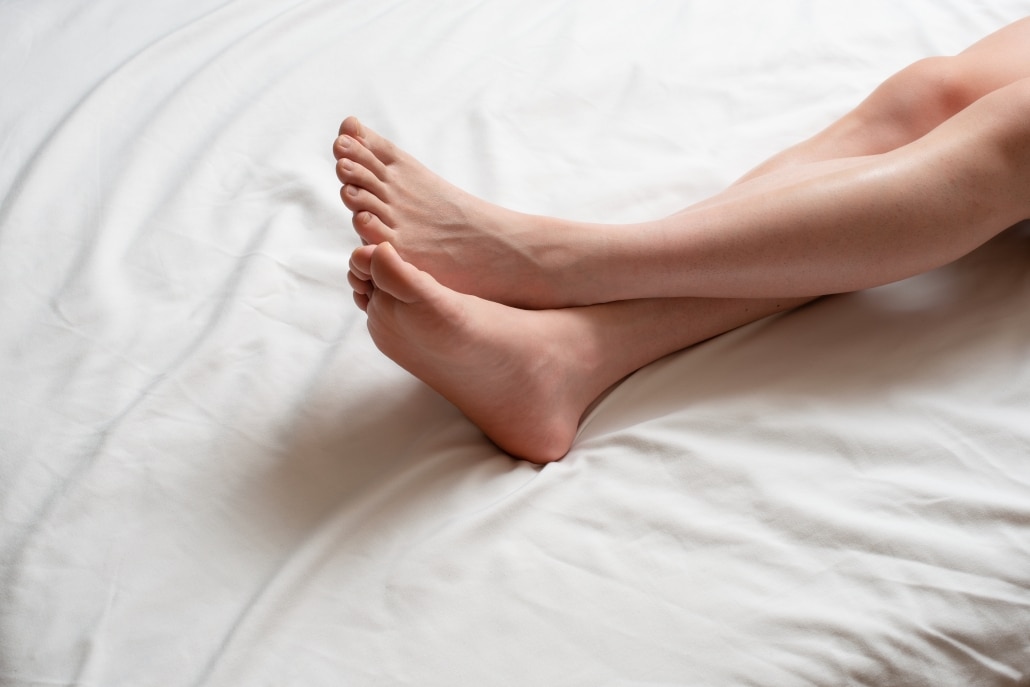
Ever heard of strawberry legs? Not everyone experiences them, but some may be familiar with them. In the USA, they are also called strawberry legs. This is because their appearance resembles the surface of strawberries with their numerous green dots or achenes, symbolizing this phenomenon. Small dark dots become visible on the skin, usually on the legs after shaving.
What exactly are strawberry legs?
Often, these dark spots are mistaken for impure skin or clogged pores. However, something else is responsible. Rather, hair ends remain in the skin after shaving. Even if the legs feel smooth after shaving, the hairs are only superficially removed and remain in the skin layers. With dark and thicker hairs, a visible shadow or dark spots often remain.
However, strawberry legs should not be confused with razor burn. The type of shaving or hair removal is not responsible for these dark spots; rather, it is the color and thickness of the leg hair. Therefore, this shaving shadow does not occur with lighter hair, and is also less common on the thighs, as the hair there is finer.
Thus, individuals with darker and thicker hair on the areas to be shaved are more affected. To avoid or at least reduce these spots on the skin of the legs, here are a few tips summarized for you on how to get rid of strawberry legs.
Tips for strawberry legs: What can you do about strawberry legs?
- Exfoliate regularly: Exfoliation can loosen dead skin cells and open clogged pores. By gently rubbing the skin in circular motions with an exfoliant beforehand, skin cells can be loosened. However, this should be done gently and not too roughly to avoid injury. This allows for a subsequent shave with the blade close to the skin.
- Use shaving foam: An appropriate product can gently soften the skin and allow the blade to glide more easily over the skin. It is important to pay attention to hygiene with the blades.
- Use a sharp blade: On well-cleaned skin, the blade can glide smoothly, provided it is not dull. Dull blades can cause skin injuries and provide further opportunities for pathogens to enter. In addition, sharp blades cut the hair deeper, which can reduce or even prevent strawberry skin.
- Epilation, sugaring, or waxing: With this type of hair removal, the hairs are removed along with the root. This eliminates cut hair surfaces and thus reduces the occurrence of strawberry legs.
- For inflamed skin: If pathogens enter through open skin areas, for example, below the sebaceous glands in the hair follicle, inflammations (e.g., folliculitis) can develop. In such cases, ilon Classic can be used for redness, itching, or pain with pus.
- And last but not least: refraining from hair removal is, of course, also a way to get rid of strawberry legs.
Further relevant articles can be found in our skin journal and on our website.
Image source: Taro/stock.adobe.com