

 DE
Larch balsam – the resin of the larch
The European Larch is not only valued for its resilience – it also bestows upon us a particularly valuable treasure: its resin. The larch thrives in altitudes between 800 and 1,200 meters, where the mountain air is clear and the soil is rich in minerals. There, it grows slowly and powerfully – the ideal prerequisite for high-quality resin extraction.

Larch Balm –
The Gold of the Forest
Larch balm, also known as larch turpentine, is a natural resin extracted from the trunk of the European Larch (Larix decidua). It contains essential oils such as pinene, as well as resin-typical substances like resin acids, which are known for their anti-inflammatory and antibacterial properties.
Traditionally, larch balm is applied externally, especially for skin inflammations, but also for rheumatic complaints. In herbal ointments, it naturally unfolds its beneficial effects.
Only tested resin qualities for medical applications
For medical applications, only carefully purified and pharmaceutically tested forms of the resin are used, as the composition of untreated crude resins can vary greatly.
These compounds are contained in larch resin

Terpenes
Have you ever deeply inhaled the refreshing scent of a coniferous forest and immediately felt more awake, freer, or simply better? What is unconsciously perceived are terpenes (e.g., α-pinene, β-pinene, limonene) – natural fragrances and active ingredients that plants produce for protection and communication.

Resin Acids
Resin acids (e.g., abietic acid, pimaric acid) are natural active ingredients from tree resin – the “wound closure” of trees. They protect the tree from germs and promote healing. This power also works on our skin: resin acids are considered antimicrobial, soothe inflamed or irritated areas, and thus support natural regeneration.

Flavonoids & Polyphenols
Both are secondary plant compounds that give many plants their intense color and protect them from external influences. As natural antioxidants, they also play a role for humans – for example, in connection with cell protection and general well-being.

Essential Oils
Essential oils from conifers possess diverse health-promoting properties. They are formed from volatile compounds that trees use to naturally protect themselves from bacteria, insects, and other environmental influences.

From Tree to Ointment
Learn how larch balm is still harvested by hand in Tyrol today.
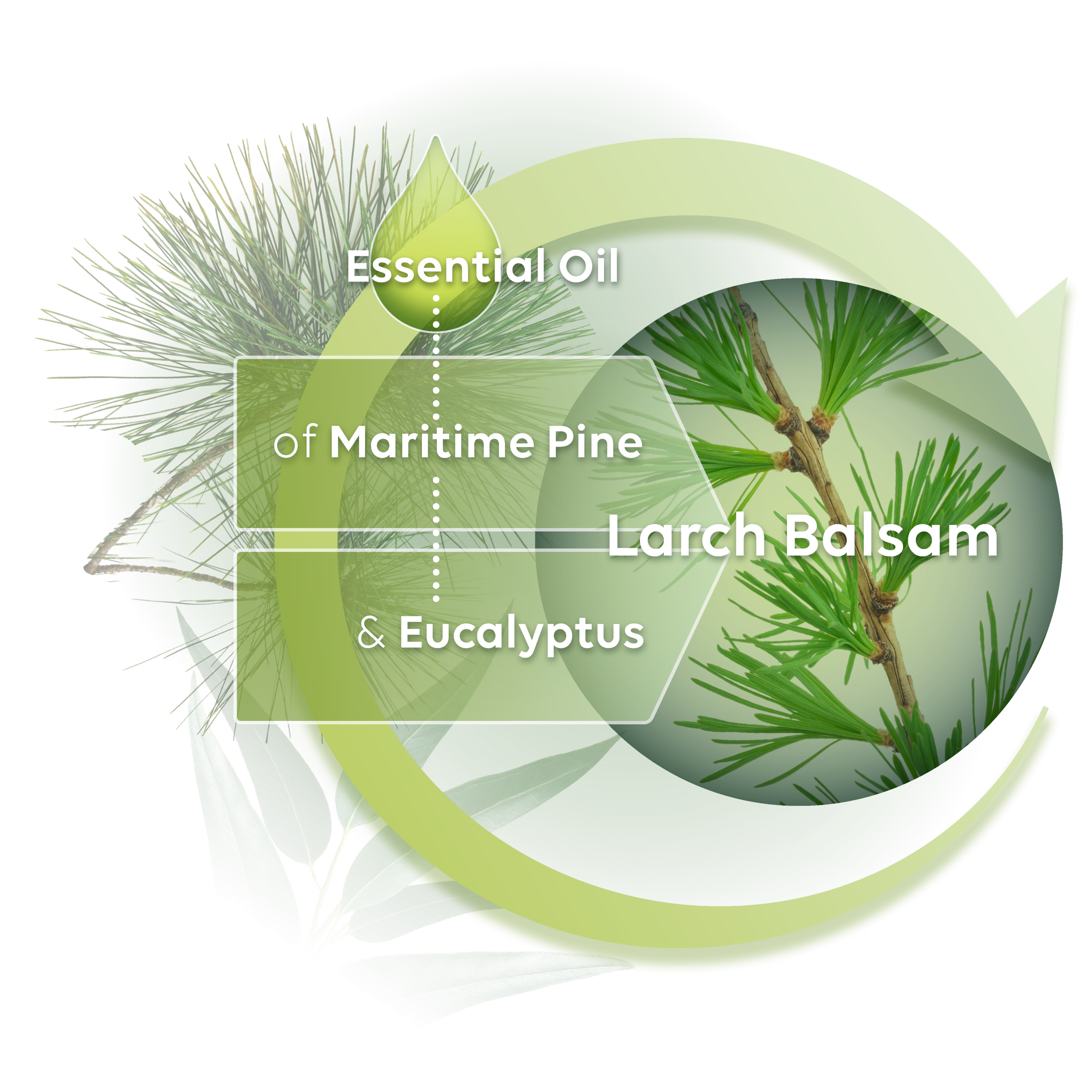
Larch balm – a central active ingredient in the herbal complex of ilon Classic
When larch resin meets a carefully coordinated combination of herbal active ingredients, a powerful connection with traditional efficacy is created.
The larch balm it contains is known for its anti-inflammatory and antibacterial properties. It is complemented by essential oils from maritime pine and eucalyptus, which naturally support and enhance these effects.
Eucalyptus & Maritime Pine – Herbal Enhancers of Antibacterial and Anti-inflammatory Effects

Eucalyptus Oil
The essential oil of eucalyptus (Eucalyptus globulus), originally from Australia and Tasmania, is known for its versatile use in natural medicine. Its main component 1,8-cineole (also called eucalyptol) is well researched and is associated with anti-inflammatory and antimicrobial properties. The fresh, aromatic scent conveys a feeling of clarity and lightness – and invigorates the senses.

Essential Oils of Maritime Pine
The maritime pine (Pinus pinaster), also known as French maritime pine, is considered a traditional component of European folk medicine. Native to the Atlantic coasts of Southwest France – particularly along the Silver Coast from Bordeaux to the foothills of the Pyrenees – it grows under harsh conditions, characterized by wind, sun, and salty sea air. This resilience is reflected in the concentration of its essential ingredients.
Targeted Excipients

Rosemary and thyme oil are included as excipients
Through their specific properties, they contribute to a pleasant skin sensation and support the sensory quality of the ointment.
- Rosemary oil conveys a warming sensation that contributes to the beneficial application.
- Thyme oil provides a pleasantly aromatic component with its characteristic scent.
Amazing Power of Nature
Although the “Green Drawing Salve” has existed for almost 100 years, current studies and laboratory investigations impressively demonstrate how astonishingly effective traditional, herbal remedies can be.
- Larch turpentine effectively combats Staphylococcus aureus – even resistant strains (MRSA) in a laboraytory setting..
Other bacteria and skin fungi are also inhibited. Turpentine and eucalyptus oil enhance the powerful effect of the ointment.¹ - Laboratory confirms: Larch turpentine, turpentine and eucalyptus oil in ilon Classic have strong anti-inflammatory effects.
Thus, the ointment specifically helps with inflamed skin.² - ilon Classic proves effective in clinical study
The study shows: With larch turpentine, turpentine oil, and eucalyptus, ilon Classic relieves folliculitis faster and significantly reduces lesions – it is well tolerated and clearly preferred by consumers for its color and smell.³
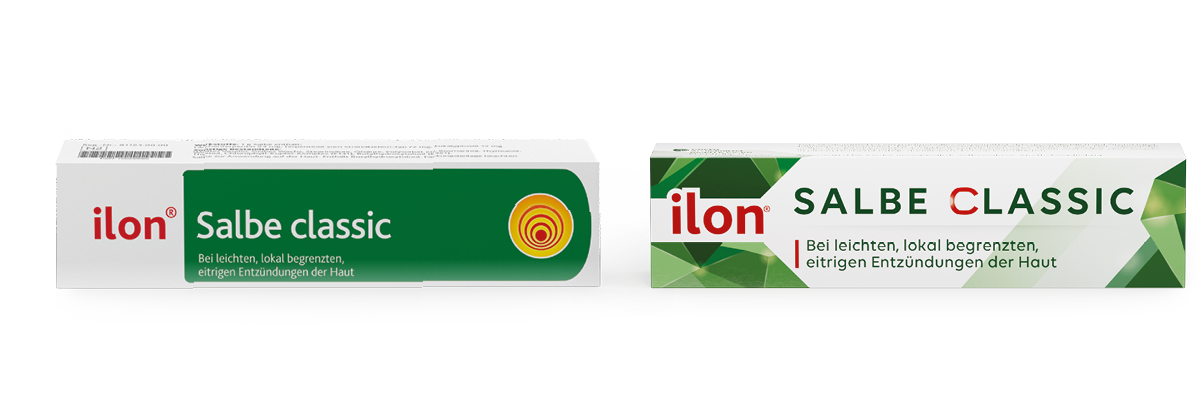
When skin rebels – trust the power of nature
Redness, swelling, or first signs of pus? ilon Classic, with the valuable resin of the larch and its unique herbal active complex, has antibacterial and anti-inflammatory effects and promotes blood circulation – for effective support with skin inflammations and small abscesses.
To view the package leaflet, please select the website for the relevant country.
- Pianta, Elisa, et al. “In vitro antibacterial and antifungal activity of a skin ointment and its active pharmaceutical ingredients larch turpentine, turpentine oil, and eucalyptus oil.” Skin Pharmacology and Physiology 38.1-2 (2025): 68-75.
- Appel, K., Rose, T., Zimmermann, C., & Günnewich, N. (2024). In Vitro Anti-inflammatory Effects of Larch Turpentine, Turpentine Oil, Eucalyptus Oil, and Their Mixture as Contained in a Marketed Ointment. Planta Medica, 90(13), 1023-1029.
- Görne, Rainer C., et al. “Turpentine ointment for the treatment of folliculitis: an open, prospective, randomized, placebo-and comparator-controlled multicenter trial.” Skin Pharmacology and Physiology 36.5 (2023): 259-266.
ilon Classic. Active ingredients: larch turpentine, turpentine oil of the maritime pine type, eucalyptus oil. Traditional herbal medicinal product for the treatment of mild, locally limited, pus-filled inflammations of the skin, such as pus-filled bumps, inflamed hair follicles, and sweat gland inflammation, based solely on long-standing use. Contains butylated hydroxytoluene. (As of 12/2024) For risks and side effects, read the package leaflet and ask your doctor or pharmacist. Cesra Arzneimittel GmbH & Co. KG, Flugstraße 11, 76532 Baden-Baden