

 DE
How is larch resin harvested?
For centuries, the precious resin of the larch has been harvested in the mountains of Tyrol—in pure handwork, with great respect for nature and a wealth of traditional knowledge. This traditional harvesting method is still alive today and makes larch balsam a very special component of herbal medicine.
.

Gently harvested,
powerfully preserved
Today, just as hundreds of years ago, the resin in Tyrol is carefully harvested by hand—tree-friendly and in harmony with nature.
This traditional harvesting method ensures that the trees remain healthy and their valuable ingredients are preserved—for pure, natural quality you can feel.

Alpine resin from the larch
The European larch (Larix decidua) has been highly valued for centuries as a resin-producing tree.

Handcrafted in Tyrol
The larch resin for ilon is harvested in Tyrol in a tree-friendly manner, exclusively by hand.

Harvested in nature’s rhythm
Harvesting takes place during the limited period from late spring to early summer, when the trees develop their natural strength.

Small yield. Big impact.
Around 150–370 g of resin can be harvested per tree—depending on the year, either annually or only every two to three years.

Filtered. Purified. Refined.
The larch resin is purified, filtered several times, gently warmed and converted into larch turpentine by decanting. Production takes place in Germany.
The traditional Tyrolean resin-harvesting method
Unlike conventional resin tapping, where wide cuts injure the bark, in spring a narrow access point is created in the trunk—carefully, precisely and down to the main root. This allows the resin to emerge naturally without unnecessarily weakening the tree. Learn more in our video.
The larch trees used are regularly inspected, managed through forestry practices and treated with care.
This ensures stable yields while also safeguarding the trees’ health and longevity.
1. Craftsmanship with experience
Experienced resin tappers—this is what the resin collectors are called—use the traditional Tyrolean resin-harvesting method to harvest resin from up to 200 trees per day under optimal conditions.
2. Careful extraction
Using a special resin spoon, the thick, golden tree resin is carefully removed and collected in containers. Around 150 to 370 grams of resin per tree per season can be sustainably harvested—without harming the tree.
3. Respect as a principle
Every step follows a clear principle: respect for the tree and its life energy. Harvesting is carried out as gently as possible and in harmony with natural growth cycles.

From larch resin to balsam
A very special natural substance is produced from the fresh, golden-shimmering resin of the larch: larch balsam, also known as Terebinthina laricina, better known as Venetian turpentine. This unique complex mixture combines the power of essential oils with valuable resin acids and has a delicate, spicy, resinous scent.
The process begins with the careful preparation of the raw resin: it is filtered, gently warmed and clarified by decanting until it turns into a clear, slightly yellowish-green liquid. Carefully sealed and stored protected from light, this botanical elixir preserves its quality and efficacy.
ilon Classic and ilon Protect are produced in Germany.
Larch balsam: Nature in these products
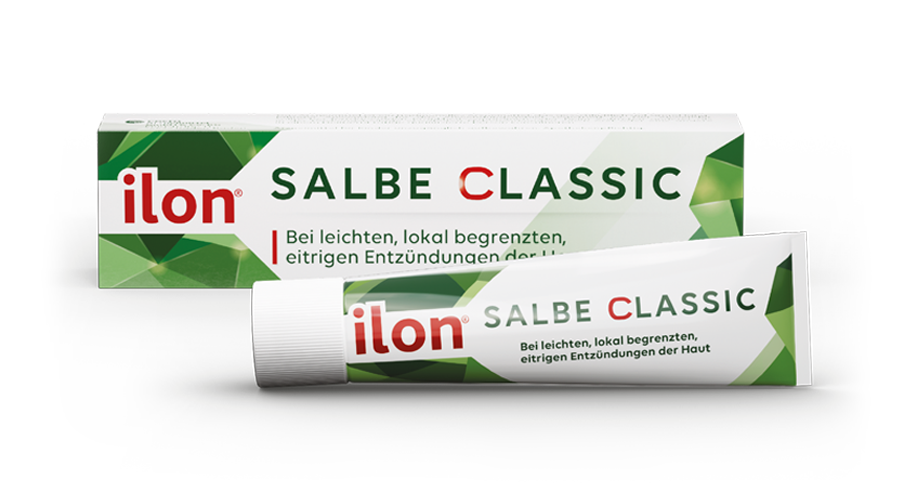
ilon Classic
Naturally strong for skin inflammation
ilon Classic uses the antibacterial, anti-inflammatory and circulation-promoting properties of larch balsam as well as the plant-based active complex. This enables it to work in a targeted and effective way for skin inflammation—for example, for pus-filled pimples or small abscesses.
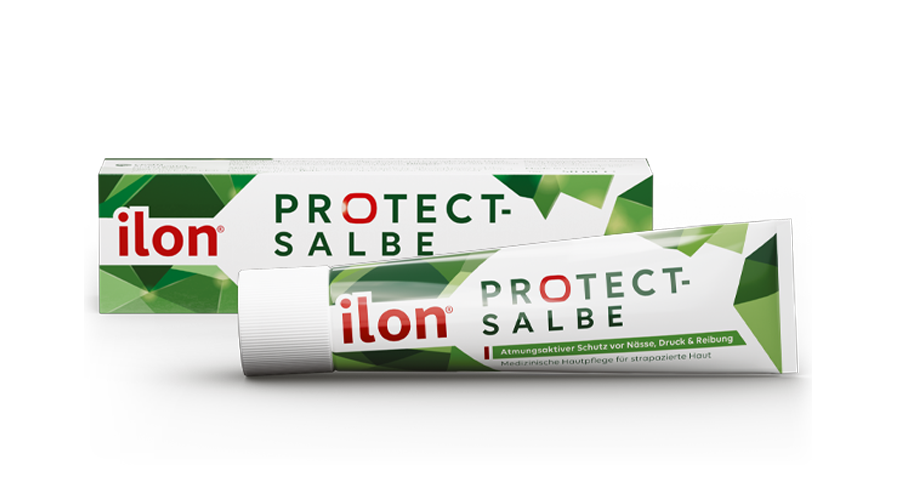
ilon Protect
Breathable protection against moisture, pressure, and friction
Resins are naturally supple and form a gentle film on the skin. Combined with other skin-caring ingredients, they reliably protect sensitive areas from friction, pressure and moisture—without sealing the skin.