

 DE
Blackheads – why me? Causes and prevention tips
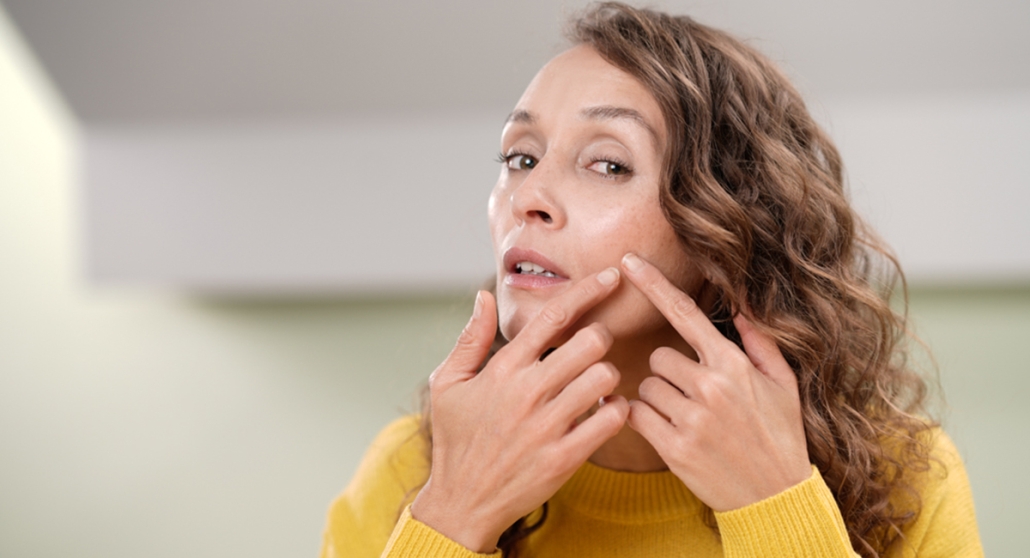
Excessive sebum production in the glands is one of the causes of, or contributes to, the development of blackheads. In medical terminology, these are also called comedones. If this excess sebum cannot drain properly at the skin’s surface due to keratinisation, the pores become clogged. A combination of dead skin cells, sebum and dirt forms and provides an ideal basis for a so-called plug that blocks the sebaceous glands. Moreover, it provides an ideal breeding ground for bacteria and germs. Comedones can take different forms; in most cases, a blackhead (a black spot under the skin) develops from an initially white comedone, also known as a whitehead. This change in colour always occurs when oxygen enters the pore and the pigment melanin contained in the sebum oxidises.
There are, of course, other causes as well, such as incorrect or excessive skincare and make-up, combined with cleansing that does not remove skin flakes and make-up thoroughly enough. The causes can also vary depending on skin type. With more sensitive skin, it is the wrong—often skin-irritating—care products that can throw the skin out of balance. This is often noticeable in the so-called T-zone, affecting the nose, forehead and chin. With oily skin, the conditions for excessive sebum production are already present; the causes can be varied and are usually individual and can be determined by a doctor. An unhealthy diet, various environmental factors, hereditary predisposition or medication are also considered possible contributors to blemish-prone skin.
Removing and preventing blackheads
To cleanse blemish-prone skin and remove blackheads, it is best to visit a beautician. They can remove these unwanted skin impurities professionally. Squeezing blackheads yourself—at worst with unwashed fingers—is an absolute no-go. If done incorrectly, purulent inflammation may develop, or scars may even remain. Therefore:
- Prevent blackheads from forming in the first place. With the right—or a gentle but thorough and at the same time antimicrobial—cleansing routine, blackheads cannot form in the first place, as dead skin flakes, excess sebum, dirt or make-up are removed. This, of course, requires regular cleansing.
- Always tailor skincare to your skin type. This allows the skin to be optimally supported in its functions. And even blemish-prone skin needs moisture; however, oily care products should be avoided in this case, as they can additionally clog the pores.
- Hot water can also help to open pores slightly and, with small aids such as blackhead strips, empty clogged pores. However, particular caution is required with sensitive skin, as these can also irritate the skin.
- Once a week, a gentle exfoliation removes particularly stubborn keratinisation from the skin and also helps prevent blackheads from forming. Here, too, it is important to pay attention to ingredients and texture. Strongly degreasing products tend to dry out the skin, which in turn stimulates sebum production. And if the skin is already oily, comedogenic ingredients should be avoided.
Home remedies for blemish-prone skin
- A honey mask is very easy to make: Mix 2 tablespoons of honey with the same amount of warm water and apply easily with a brush or cloth. Only the eye area should be avoided. Gently massaged in, the mask also provides soothing relaxation.
- Clay masks are a little more time-consuming to mix, as they must be prepared with a plastic or wooden spoon in a glass, plastic or porcelain container. Clay is said to have detox properties. These are intended to rid the skin of bacteria or pollutants.
- Not a home remedy, but cosmetic treatments are recommended for anyone who suffers from a large number of impurities. Trying out a wide range of home remedies is not advisable here.
What the masks have in common is that they are free from alcohols, fragrances and colourants.
More on the right care for blemish-prone skin, pimples or purulent wounds can be found in our Skin Journal.


