

 DE
Blemished skin – these tips really help
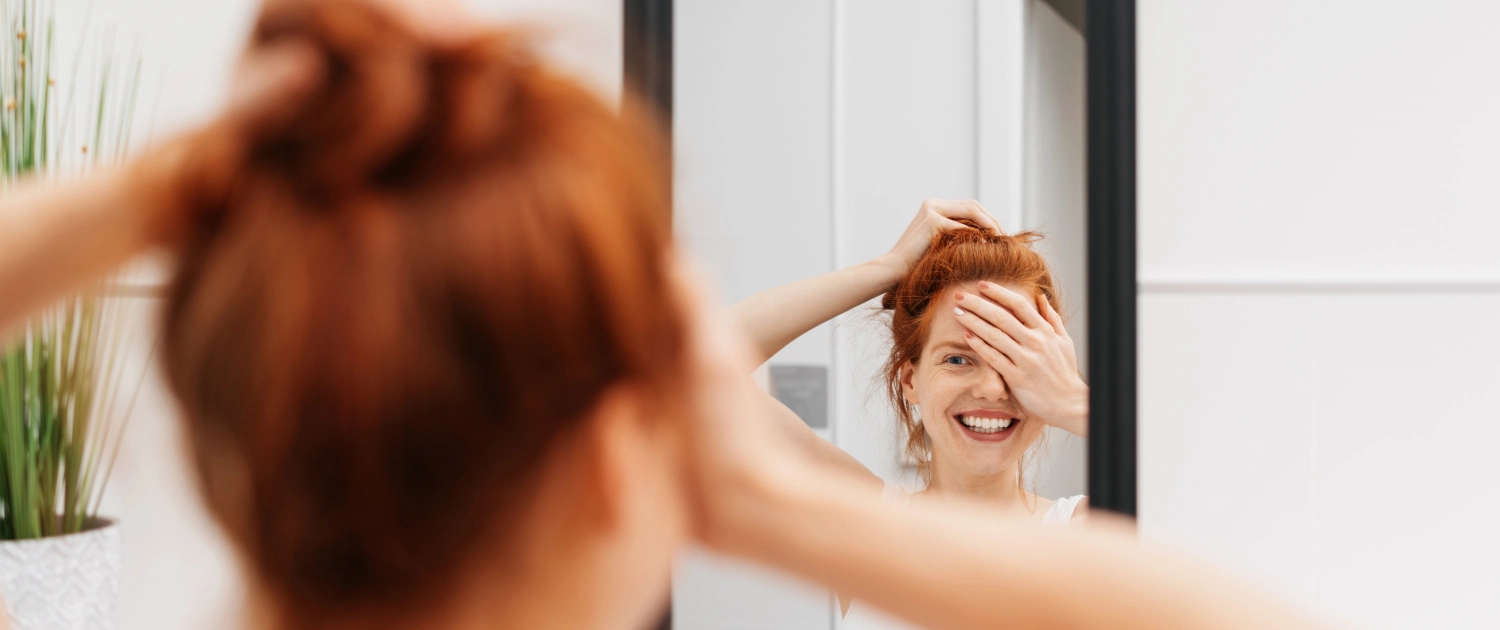
Whether on the face, back, shoulders or arms, blemished skin can occur on various parts of the body. However, it is probably most unpleasant and distressing on the face or décolletage, as everyone can see it and it can often lead to discomfort. Yet the myth still persists that blemished skin is also a sign of being unclean. We would like to dispel precisely this prejudice in the following article—and, beyond that, it is all about blemished skin and tips that really help.
Blemished skin—what exactly does that mean?
Excess sebum production is the cause of what is known as a comedo, also known as a blackhead. This clogs the skin’s pores. Dead skin flakes that occur during the natural skin regeneration process remain on the skin and combine with sebum. This creates the basis for blackheads. Good cleansing can help achieve clear skin here. Excess sebum must be removed from the skin regularly. However, if everyday dirt, make-up or various skincare products are added, a vicious cycle is created for the skin.
If affected areas are not cleansed sufficiently and regularly, skin inflammation can occur—i.e., pimples or even pus-filled pustules. In general, people with oily, large-pored skin in particular tend to develop blackheads and pimples, or pustules. The same applies to combination skin, which is characterised by oily areas in the so-called T-zone (forehead, nose and chin).
If pimples or pus-filled pustules occur in large numbers and regularly, this is also referred to as acne. There are various forms, which are caused by hormones. Hormones are often the main cause of excessive sebum production. Skin particularly often “breaks out” in young people of both sexes during puberty, but women are also affected during pregnancy and menopause, before menstruation or during pill breaks.
However, if blemished skin becomes visibly apparent due to stress or hormonal fluctuations, this can be counteracted by changing habits. But in the case of long-term and widespread skin impurities, you should always seek help from a doctor to analyse together what your skin needs.
5 tips for blemished skin
Blemished skin – these tips really help. Of course, it is easy to make that claim. But what exactly makes the following tips real problem-solvers for pimples & the like? First, it should be made clear that there is no quick, immediate fix for blemished skin. This condition did not develop overnight; rather, it has developed over a longer period due to various influencing factors. Therefore, addressing this skin condition requires patience, time and discipline.
Depending on your skin type, it can of course also happen more quickly and initial results may become visible soon. However, too much euphoria at the beginning or setting goals that are too ambitious can also lead to a feeling of failure. Yet this is often not the case at all. We often simply tend to demand too much of our skin and our body.
The desire for an optimal appearance is simply far too great. At this point, everyone should ask themselves: what is an optimal appearance, actually?! Is it not rather about feeling comfortable in your own skin and body? So in future, let us be much more pleased about small steps in that direction and give our body the time it needs to regenerate. And we can support it in doing so. Here are our top 5 that really help in the fight against pimples and blackheads:
- Always cleanse the skin thoroughly, but gently. Especially with blemished skin, it is important to regularly remove excess sebum. Otherwise, as described, pores can become clogged and this can be an initial cause of impurities and subsequent inflammation. However, in addition to cleansing, the skin should always be supplied with important ingredients.
- Determine your skin type—this is a very important point. Because what use is cleansing and caring for blemished skin if the products are not tailored to your skin type? The result is more likely to worsen rather than improve the skin condition. An expert, such as a dermatologist or medical cosmetician, can help you find the right skincare.
- Use non-comedogenic and skin-friendly products (e.g., pH value). Many people are still not familiar with what this means. But it is actually not difficult to decipher. Comedo is another term for blackhead, as mentioned above, and products with this label were developed specifically for blemished skin. This means that the oily, fatty—and therefore pore-clogging—component is low, while important moisture supply is still ensured. Because even blemished, oily skin can dry out, and this type of care is intended to prevent exactly that. Dry out pimples, yes—but not the overall complexion.
- Now some of you may think this tip is nothing new, and perhaps that is true. However, diet plays a truly decisive role in our appearance. Lots of sugar, coffee, alcohol and cigarettes often make our skin look dull and pale. By contrast, a varied, nutrient-rich and healthy diet supports the skin in its function. Our body needs essential vitamins and trace elements supplied from the outside so that all functions can be carried out fully.
If a deficiency occurs, corresponding deficiency symptoms develop, including on the skin. This is a gradual process, as the body gradually reduces processes and switches into survival mode. In this state, optimal supply is no longer possible. Therefore, for everyone—even without blemished skin—the aim should be to support the skin’s functionality as well as possible. This also helps you live longer and healthier; in other words, taking a look at the ingredients in your food is an absolute must. Temporarily balancing unhealthy foods with healthy ones can help. In general, however, the focus is more on certain habits. Because unhealthy habits can also be a cause of skin inflammation in the long term. - Even if it is very tempting, you should definitely avoid touching blemished skin with your fingers. And even more so, you should not squeeze pimples or blackheads with your fingers. Our fingers naturally carry a large number of bacteria and germs, which can enter small injuries when you manipulate the skin.
Every squeezing and scratching causes injuries, even if they are not always immediately visible. This disrupts the skin’s natural barrier, and bacteria or germs can penetrate without encountering a natural defence. The consequences can be serious, for example inflammation or pus-filled skin infections—and in the end, the skin looks worse than before. So our last—and actually simplest—tip is: keep your fingers off your face and away from blemished skin.
Which ingredients can help?
- A microalgae ingredient from the well-known spirulina algae offers hope. This active ingredient combines the properties that the algae has developed over thousands of years to protect itself from external influences and survive a wide range of challenges. In other words, an active ingredient from nature. Skincare with the microalgae active ingredient has an antibacterial, regenerating effect and protects against external influences.
- Essential oils, for example from larch, pine and eucalyptus, are also recommended—especially if a pus-filled skin inflammation, such as a pus-filled pimple, is emerging. They are anti-inflammatory, circulation-boosting and antibacterial.
- A well-known home remedy with a similar antibacterial and anti-inflammatory effect is tea tree oil. And honey, especially manuka honey, is also considered a natural home remedy. Applied to the skin as a mask, it also has an antibacterial effect.
- Vitamin C, vitamin A and vitamin E are also said to have an anti-inflammatory effect—another active ingredient from nature, so to speak, which is absorbed through diet and supports and protects the skin from within.
- Zinc oxide is also said to be suitable for use against pimples. In wound healing, a so-called zinc ointment is often used because it has an antibacterial, antiseptic and astringent effect. These properties can also help when used on pimples, because zinc oxide binds moisture from the skin and thus dries out the blemished area. However, caution is also advised when using the ointment. Applying it only to the affected area can help, to avoid drying out the surrounding skin or causing dry skin.
If you found the topic interesting and helpful, you will find more articles to browse in our Skin Journal. Enjoy reading!
Image source: AdobeStock
Treat pus-filled pimples effectively – with ilon Classic
Stubborn pustules located under the skin often feel hard and sensitive to pressure, cause pain, and are difficult to get rid of.
ilon Classic provides targeted support for the skin: it helps draw out pus, combats inflammation, relieves swelling and pressure pain, and promotes natural regeneration. Its antibacterial effect and the promotion of blood circulation support healing, while the ointment is particularly pleasant to use thanks to its subtle scent and almost invisible texture.


