 DE


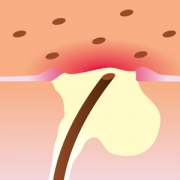

Always shave calmly and extremely carefully


For most women, regular hair removal on the legs, under the arms and in the intimate area is a standard part of personal care, and more and more men are also using razors and epilators for smooth skin. Aesthetic reasons play a decisive role, while athletes in particular see hair-free legs and arms as an important measure to protect themselves from greater inconvenience in the event of injuries. Cleaning wounds and applying plasters is much easier and more comfortable on hairless skin—provided the skin is spared irritation, redness and inflammation during hair removal.
With particularly sensitive skin, poor-quality tools and incorrect technique, or insufficient care, skin irritation or painful inflammatory processes can quickly occur. The groin area and underarms are especially affected, among others, as their anatomical characteristics require extra care when shaving and epilating.

When shaving, not only is the hair cut off, but the top layer of skin is also affected. This often leads to redness and burning; germs can also penetrate the damaged skin and trigger inflammatory reactions.
This applies equally to wet and dry shaving. While with wet shaving, poor cutting tools and improper handling can irritate or injure the skin, the rapid rotary movements of an electric dry shaver can severely irritate the skin on the legs or other parts of the body. This is especially the case if the stressed skin is not adequately cared for immediately after shaving, or if alcohol-based aftershaves are used, which can cause intense burning and dry out sensitive skin.

With methods such as epilation, waxing or sugaring, body hair is removed along with the root. Although the effect lasts longer than shaving, it puts even more strain on the skin: after treatment, the area around the hair follicle swells and small pus-filled pimples can form—also known as razor bumps—which may remain visible for several days. If germs penetrate the skin, this can lead to painful inflammation such as folliculitis.
Click here to insert your own text
People with sensitive skin usually prefer wet shaving.
For an optimal shaving result and to protect the skin, please note the following:
The skin in the intimate area is very sensitive. Special care should be taken here. Before shaving, soften the skin with warm water and mild shaving foam, and use only suitable, high-quality shaving tools! After shaving, it is recommended to use a care product that simultaneously nourishes and protects the sensitive skin.
Yes, minor skin inflammations can also occur during epilation, as the epilator “forcibly” pulls hairs from the skin, irritating the area where the hair grows out. To prevent this, skin and hair should be softened before epilation with a warm bath or massage. This opens the pores, allowing hairs to be pulled out more gently.nnThe epilation technique also determines whether skin irritations occur. You should always pull the skin taut in the area being epilated and position the epilator perpendicular to the skin surface. Then, epilate against the direction of hair growth. To prevent germs and bacteria from entering the pores and causing inflammation, it is important to close the pores again after epilation: Run cold water over the affected skin areas for a short time.
An old or unsuitable razor can severely irritate the skin. Old blades no longer cut hair effectively, and not every razor is suitable for every skin type. It is advisable to seek advice and perhaps try out a few different razors.
The formation of small red spots after shaving is a widespread problem that affects almost anyone who shaves their face or body. The reason: shaving “forcibly” tugs at the hairs and irritates the area where the hair grows out of the skin. The red bumps are therefore a sign of irritation.
To help prevent skin irritation, it is advisable to take a warm shower or bath before shaving, as this softens the hair and skin. In addition, you should use a mild shaving foam and good shaving equipment.
Note: However, bathing or showering also opens the pores and can therefore promote skin inflammation, as pathogens can penetrate more easily.
To prevent unpleasant skin reactions after shaving, the use of mild aftershave lotions or balms have proven effective. Its disinfecting and antibacterial properties can help prevent typical skin irritations and inflammation, and the skin is supplied with soothing moisture.
If the red bumps are already there and become inflamed, then applying ilon Classic thinly activates the body’s self-healing powers and the inflammation subsides.
Hygiene is the top priority—both for prevention and especially during treatment. Always wash your hands thoroughly. Razors and towels should only ever be used by one person.
Before shaving, you can apply a hair rinse or conditioner. This makes the hair softer and easier to shave off. Shave in the direction of hair growth and then dry the skin carefully without rubbing. Use a nourishing balm that can prevent the development of shaving problems. At the first signs of inflammation or pimple formation, you can apply ilon Classic directly to the inflamed areas.
A pimple (folliculitis) most commonly occurs in the beard, on the buttocks, on the thighs, and in the pubic area. Repeated injuries to the same skin region are a possible cause. This can easily happen, for example, during shaving, especially in the intimate area. If bacteria manage to penetrate the uppermost skin layer, the area around the hair follicle can become inflamed – leading to what is known as folliculitis. The skin then forms superficial pustules or inflamed nodules around the hair.
Pimples form when a pore is clogged and there is no drainage for, e.g., sebum. Then, inflammation and pus can develop. Pimples are skin changes that initially arise independently of bacteria or other inflammatory pathogens. However, the deeper sebaceous-horn layers provide an ideal breeding ground for bacterial germs or yeasts. For this reason, some types of bacteria that actually belong to the normal skin flora can suddenly cause inflammation.
Therefore: Never squeeze pimples! This can lead to the purulent process spreading even further. Tip: If pimples appear after shaving, applying a thin layer of ilon Classic inhibits inflammation in the affected area.
The causes of this inflammation are bacterial. The main triggers are so-called staphylococci (Staphylococcus aureus). This type of bacteria is found in food, bodies of water and in nature almost everywhere; around 25% of all people carry this bacterium on their skin or in their upper respiratory tract.
People with diabetes should consult a doctor, as they require special medical treatment for inflammation of the hair follicle.
Proper shaving – minimizing skin risks:
· Wash your hands thoroughly before shaving
· Shave calmly and carefully
· Do not shave with dull blades
· Apply shaving foam or gel to achieve a better gliding effect for the razor
· Use the razor in the direction of hair growth
· Do not press the razor too firmly
· Exercise special caution when shaving the intimate area
· For intimate shaving, use a razor with a pivoting head and at least a double blade
· Do not share razors with others – bacteria and germs lurk here!
· As a lubricant and softener before shaving, apply mild shaving foam, shower gel, hair conditioner, or olive oil to the hairs
· Use a mirror when shaving
· Keep the skin taut to avoid cuts
· For trimming hairs, use long-hair trimmers or a comb and scissors
· After shaving, apply a disinfecting and anti-inflammatory ointment to prevent irritation and pimples from developing in the first place
All hair removal creams are based on the primary substance thioglycolic acid and are very alkaline substances that not only achieve their intended effect by strongly attacking the hair, but also irritate the skin. Therefore, these creams are enriched with nourishing ingredients such as bisabolol, vitamin E, or apricot oil. Nevertheless, the skin is damaged and requires special care after hair removal. Therefore, thoroughly wash off any residue of the hair removal cream with lukewarm water. It is also advisable to shower using a shower gel with a pH value between 4 and 5.5, followed by treatment with a cream that has the same pH value. This helps to restore the skin’s natural acid mantle, which has suffered from chemical hair removal.
Brazilian waxing refers to the removal of pubic hair in the intimate area using the waxing method. The name comes from the fact that from the 1980s onwards, bikinis on the legendary Copacabana in Brazil became increasingly skimpy, making a hair-free pubic area ever more popular.nnThere are various types of Brazilian waxing: With the Brazilian Hollywood Cut, all pubic hair is removed. With the Brazilian Landing Strip, two narrow, parallel strips of hair remain, which, together with the hairless strip in between, resemble a runway. The Brazilian Triangle is also popular: a small triangle of pubic hair. With the so-called Brazilian Special, the shape of the pubic hair is completely up to you; popular motifs include hearts, flowers or butterflies.
If folliculitis is discovered more and more frequently, suitable precautions should be taken to avoid major skin problems. Initial approaches include, for example, the correct choice of clothing. Clothing that is too tight can lead to heavy sweating or chafing. Therefore, prefer loose and airy clothing. In addition, clothing should be washed at high temperatures, as this measure can kill most bacteria.
If symptoms persist, worsen, or if side effects occur, a doctor or pharmacist should be consulted.
The term hair follicle is a synonym for hair follicle and refers to the structures that anchor our hair in the skin.
If small pustules often form on your skin after shaving, you should disinfect both the razor and your skin with medical alcohol. Instead of oil-based skin care products, which can promote the recurrence of hair follicle blockage, you should switch to non-occlusive, well-absorbing care products. Thanks to its disinfecting and antibacterial properties, typical skin reactions and inflammatory processes can be avoided. If the skin is already irritated and inflamed, apply ilon Classic overnight during the initial stage. Never squeeze pustules, as this can push bacteria deeper into the tissue.
In general, hair follicle inflammation can occur anywhere on the body where there is hair. However, areas such as the chest and torso as well as the hair-bearing scalp are most commonly affected.